
Last Updated: November 8, 2026
What's the Best Thing for Snoring? 10 Ways to Snore Less at Night
Most people who ask what the best thing for snoring is want one answer, and there are really two. The best thing to do tonight usually costs nothing, and the best thing to use every night is what you reach for when those free fixes aren’t enough.
To help you find both, we’ve put 10 options in order of how much each can do, with a note on how soon it might work, and flagged the signs that mean a doctor should come first.
We make SnoreRx and put it at No. 1, but depending on why you snore, one of the other nine, several of them free, may suit you better.
Key Takeaways
Pick the fix that matches where the noise begins. A blocked nose and a jaw that relaxes backward narrow different parts of the airway, so the remedy that quiets one can do little for the other.
Four changes can work from the first night. Sleeping on your side, skipping alcohol before bed, clearing a stuffy nose and raising your upper body cost little or nothing to try tonight.
Snoring mouthpieces have a formal medical recommendation behind them. A joint guideline from two sleep medicine groups advises sleep doctors to prescribe one, rather than leave the snoring untreated, when an adult without sleep apnea asks for help.
Snoring with gasps or pauses needs a doctor first. Those can signal obstructive sleep apnea, and an over-the-counter remedy that quiets the snoring can also hide one of its main warning signs.
If a week of free fixes hasn’t worked and you have no signs of apnea, try SnoreRx Plus. It’s shaped by your own bite at home and adjusts a millimeter at a time, and you can compare both models before choosing one.
What Causes Snoring at Night?
Snoring is the rattle of relaxed throat tissue as air squeezes past it in your sleep. Anything that narrows that space makes the vibration more likely, and most snorers have more than one cause stacked together.
Lying on your back. Gravity pulls your tongue and soft palate, the soft back part of the roof of your mouth, toward your throat.
A blocked nose. A cold, allergies or a deviated septum, where the wall between your nostrils sits off center, push you to breathe through your mouth.
Alcohol and sedatives. Both relax the muscles that keep your throat firm while you sleep.
The way your jaw and tongue sit. A lower jaw that rests further back, or a tongue that relaxes in deep sleep, crowds the airway behind it.
Extra weight and short nights. Tissue around the neck can narrow the airway, and being overtired lets the throat relax more than usual.
Because the causes of snoring so often overlap, the first fix you try may quiet only part of the noise.
Snoring Remedies Compared at a Glance
We’ve ranked these by how much each one can do for everyday snoring, weighing the research behind it and how many snorers it can realistically help. The most effective option isn’t always the first one to try, so each remedy also shows how soon it can make a difference.
| Remedy | Best for | How soon it can help | Cost |
|---|---|---|---|
| 1. Adjustable anti-snoring mouthpiece | Snoring from a jaw and tongue that relax backward | From the first night for some people, with a few weeks of fine-tuning | From $59.99 for SnoreRx |
| 2. Sleeping on your side | Snoring that’s loudest when you lie on your back | Tonight | Free, or the price of a body pillow |
| 3. Skipping alcohol before bed | Snoring that’s worse after a drink or two | Tonight | Free |
| 4. Clearing a blocked nose | Snoring that flares with colds or allergies | Tonight for saline and steam, several days for allergy sprays | A few dollars |
| 5. Nasal strips or dilators | A nose that feels narrow or stuffy at night | Tonight | Low, though strips are used once and bought again |
| 6. Raising your upper body | Back sleepers who can’t stay on their side | Tonight | A wedge pillow or bed risers |
| 7. A regular sleep schedule | Snoring that’s worse after short or late nights | After several nights of steady sleep | Free |
| 8. Mouth and throat exercises | Snorers willing to practice every day | After weeks of daily practice | Free |
| 9. Losing excess weight | Snoring that started or got louder with weight gain | Over months | Varies with the approach |
| 10. Seeing a doctor | Loud snoring with gasping, pauses or daytime sleepiness | Depends on the diagnosis | Depends on your insurance and treatment |
If you’re not sure where your snoring starts, the common types of snoring are a useful place to begin. Your partner’s account, or a few nights of recordings, is a better guide than how the snoring sounds.
Which Snoring Fix Should You Try First?
Start with question 1 and follow your answers.
- Question 1
Do you gasp, choke or stop breathing in your sleep, or feel very sleepy during the day?
YesSee a doctor firstThese can be signs of sleep apnea, so get checked before you try any snoring remedy.
No, go to question 2 - Question 2
Does your snoring get quieter when you roll onto your side?
YesSleep on your sideA body pillow behind your back helps you stay there. If you can't, raise your upper body with a wedge pillow.
No, go to question 3 - Question 3
Is your nose blocked or stuffy at night?
YesClear your nose before bedTry a saline rinse or a hot shower, then a nasal strip or dilator overnight.
No, go to question 4 - Question 4
Do you still snore on most nights?
YesTry an adjustable mouthpieceSnoreRx holds your lower jaw slightly forward to increase airway space. Check who it isn't for before you buy.
No, look for triggersLook for triggersOccasional snoring often follows a drink or a late night. Skip alcohol before bed and keep a steady sleep schedule.
This chart is a starting point, not a diagnosis. If your snoring worries you, talk to a doctor.
The 10 Best Things for Snoring at Night
Some of these work from the first night and others take weeks of steady effort, so pairing one fast fix with one slow one is a sensible way to start.
1. Wear an Adjustable Anti-Snoring Mouthpiece

If you have no signs of sleep apnea, an adjustable mouthpiece is the best thing to use for snoring that happens most nights and keeps going when you roll onto your side. Doctors call it a mandibular advancement device, a name that spells out the job, since mandibular means your lower jaw and the device holds it slightly forward as you sleep.
That forward position increases airway space and gives your tongue and throat less room to sag back and rattle.
The American Academy of Dental Sleep Medicine and the American Academy of Sleep Medicine put this in writing, with a joint clinical guideline advising doctors to prescribe one when an adult without sleep apnea asks for help with snoring. SnoreRx brings that idea home in a mouthpiece you fit yourself, with FDA clearance for reducing snoring in adults 18 and older.
Fitting it takes a mug of hot water and a firm bite at home. From there, you begin on the 1 mm setting and inch forward one step at a time, with at least three to five nights on each. The sweet spot for most people is somewhere from 3 to 5 mm, and the device goes up to 6 mm.
Each step is a quick squeeze-and-slide by hand, and SnoreRx Plus has one extra move because its top half lifts off first. Here is the whole adjustment from start to finish:
The first few nights take some getting used to, since it can feel bulky and may leave you with extra saliva, a dry mouth or a tender jaw. Practice helps, so spend one to three hours a day with it in while you read or watch TV during your first two to three days.
Two well-known buying guides put SnoreRx Plus first in 2026. It won Best Anti-Snore Device Overall in Forbes Vetted’s roundup in February, and the Sleep Foundation’s rankings list it as the Best Overall anti-snoring mouthpiece.
Verified buyers give the SnoreRx range a 4.9 out of 5 average over more than 2,300 customer reviews.
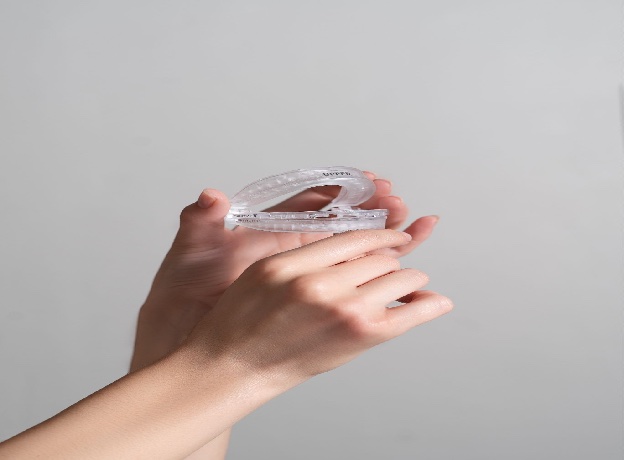
The original SnoreRx costs $59.99 and is one solid piece, while SnoreRx Plus costs $99.99, opens and closes on a hinge as your jaw shifts, and comes apart for cleaning. If you grind or clench, check with your dentist first, since SnoreRx won’t treat grinding and heavy grinding wears it down faster.
The catch: SnoreRx isn’t for everyone, and any of these rules it out.
Being under 18
A history of TMD, the jaw joint condition
Central sleep apnea or any other breathing disorder
Loose teeth, tooth abscesses, or severe or advanced gum disease
Anything already in your mouth at night, such as dentures, braces or another dental appliance
Implants, crowns and caps need a dentist’s sign-off before you start, and anyone ruled out should ask a doctor or dentist which snoring options are safe for them.
If nothing on that list rules you out and the elbow nudges have gone on long enough, SnoreRx Plus is made for snoring that starts with a jaw slipping back in your sleep. Buying on snorerx.com gets you 30 nights to try it and a refund if it isn’t right for you.
Order SnoreRx Plus or start with the $59.99 original.
2. Sleep on Your Side
Lying on your back lets gravity pull your tongue and soft palate toward the back of your throat, which is why so many people snore loudest in that position. Rolling onto either side keeps that space clearer, and it’s the easiest free change to test tonight.
The hard part is staying there, since most of us roll back without noticing. A long body pillow tucked behind your back makes rolling over harder, and a belt with a firm bump at the back does the same job with more force.
Ask your partner whether the snoring fades when you turn onto your side. If it does, and nobody has heard pauses or gasping, side sleeping may be all you need.
It also pairs well with a mouthpiece, since mouthpieces tend to work best for people who sleep on their side or stomach.
The catch: If you snore just as loudly on your side, position isn’t the main cause, and you’ll need another fix with it.
3. Skip Alcohol for a Few Hours Before Bed
Alcohol relaxes the muscles that keep your throat firm, so an airway that stays quiet on a dry night can rattle after a couple of drinks. Mayo Clinic suggests avoiding alcohol for at least two hours before bed and telling your doctor before you take sedatives, which relax the throat in a similar way.
Moving your last drink earlier in the evening is a decision you can make at dinner tonight.
The catch: It won’t change snoring that also happens on alcohol-free nights, so it works best as one part of your plan.
4. Clear a Blocked Nose Before Bed
A blocked nose pushes you into breathing through your mouth, and mouth breathing makes the soft palate and throat tissue more likely to vibrate. A saline rinse or a hot shower an hour before bed loosens cold-related congestion.
For allergies, a doctor or pharmacist may suggest a steroid nasal spray, which works best with daily use. Over-the-counter decongestant sprays are labeled for no more than three days in a row, because longer use can leave your nose more blocked than before.
A clear nose helps only with the share of snoring that starts there. If you still snore with your nose fully clear, the noise is coming from further back.
The catch: If your nose stays blocked for weeks, or is always blocked on one side, see a doctor, because a structural problem like a deviated septum may need medical care.
5. Try Nasal Strips or Nasal Dilators
Nasal strips stick across the bridge of your nose and lift the sides open from the outside, while nasal dilators sit just inside the nostrils and hold them wider from within. Both are drug-free and inexpensive, making them an easy option for a night when your nose feels narrow.
The Mayo Clinic notes they aren’t effective for obstructive sleep apnea, so anyone with gasps or pauses in breathing should see a doctor first. Strips and dilators also do little for snoring that starts behind the tongue.
If a strip eases your breathing while your partner still hears the same snoring, your nose was never the main problem. A mouthpiece that brings your jaw forward is the next thing to try.
The catch: Strips are single use, so the cost repeats every night, and their adhesive can irritate sensitive skin.
6. Raise Your Upper Body
Sleeping with your head and chest slightly raised lets gravity help keep your airway clear, and Mayo Clinic suggests raising the head of your bed by about four inches. The Sleep Foundation recommends a wedge pillow or a raised bed frame and advises against simply sleeping on a higher pillow.
Stacked pillows tend to bend your neck forward and push your chin toward your chest, which can crowd the airway. A wedge or bed risers keep your neck in line with your back.
The catch: Some people slide down a wedge or wake with a stiff neck, and if you have a neck or spine injury, check with your doctor first.
7. Keep a Regular Sleep Schedule
Being overtired lets your throat muscles relax more deeply than usual, which is why snoring often gets louder after a short night or a run of late ones. The Sleep Research Society and the American Academy of Sleep Medicine jointly recommend at least seven hours a night on a regular basis for adults aged 18 to 60.
Getting up at the same time every day, weekends included, is the habit that holds the rest of the schedule in place. Putting your phone away for the last half hour and keeping late caffeine out of the evening make it easier to fall asleep on time.
The catch: Better sleep habits improve your sleep overall, but on their own they won’t fix snoring caused by something else.
8. Practice Mouth and Throat Exercises
Mouth and throat exercises, sometimes called myofunctional therapy, work the muscles of your tongue, soft palate and throat so they’re less likely to go slack in your sleep. The evidence is still developing, and the Sleep Foundation says some research suggests they might reduce how loudly and how often people snore.
The physician-reviewed exercise guide from SleepApnea.org suggests 10 to 30 minutes a day, kept up for at least three months. These four are easy places to start.
Tongue slide. Put the tip of your tongue on the roof of your mouth and slide it backward, repeating for three minutes a day.
Tongue push-up. Press the tip of your tongue to the roof of your mouth where your front teeth meet your gums, then open and close your jaw at least 10 times while your tongue stays put.
Tongue stretch. Stick your tongue out as far as it will go and hold it for 10 to 15 seconds, five times in a row.
Vowel sounds. Say or sing A, E, I, O and U out loud, drawing each one out for a few seconds.
The catch: Results depend on keeping the routine going every day for months, and the exercises are no substitute for a doctor if you might have sleep apnea.
9. Lose Excess Weight If It’s a Factor
Extra weight, especially around the neck, adds tissue that can narrow the airway once your muscles relax at night. If your snoring started or got louder as you gained weight, losing some of it may quiet things down.
Quitting smoking belongs with the same slower lifestyle changes, and Mayo Clinic lists both among its self-care steps for snoring.
The catch: It’s slow, and people of every size snore, so it works best alongside a faster fix.
10. See a Doctor When Snoring Won’t Budge
If your snoring is loud most nights and nothing you’ve tried has changed it, it’s time to see a professional. A family doctor can check your nose and throat, refer you to a sleep specialist and arrange a sleep study, which is how sleep apnea is diagnosed.
What happens next depends on the diagnosis. CPAP, a bedside machine that sends gentle air pressure through a mask, is the standard treatment for obstructive sleep apnea. Dentists can also make custom mouthpieces and adjust them over several visits, and surgery is sometimes an option for structural problems in the nose or throat.
The catch: It takes appointments and time, and that time is well spent whenever apnea is a possibility.
What’s the Best Thing for Snoring Tonight?
The best thing for snoring at night, when you need a quieter bedroom by bedtime, is a short routine built from the free changes. None of them is certain to work on the first night, and together they cover the most common triggers you can change in a single evening.
| When | What to do | What it changes |
|---|---|---|
| After dinner | Have your last alcoholic drink, or skip it tonight | Gives your throat muscles at least two alcohol-free hours before sleep |
| An hour before bed | Rinse your nose with saline or take a hot shower | Loosens congestion so you breathe through your nose |
| At bedtime | Set up a wedge pillow or a body pillow behind your back, and add a nasal strip if your nose feels narrow | Keeps you raised or off your back, with your nostrils open |
| Lights out | Lie down on your side, and roll back onto it if you wake up facing the ceiling | Helps keep your tongue from falling back toward your throat |
If you’re wondering what is the best thing to use for snoring once those changes are in place, pick a device that works on the right part of the airway. Strips and dilators widen the nostrils and a belt keeps you off your back, while an adjustable mouthpiece works on the jaw and tongue, where snoring in every position often starts.
Which Snoring Remedies Actually Work?
The research behind snoring remedies runs from formal guidelines to almost nothing. A remedy can be well supported and still be wrong for you, because the evidence applies only to snoring with the cause it targets.
| How strong the evidence is | Remedies |
|---|---|
| Backed by guidelines or consistent research for the right person | Mouthpieces for snoring without sleep apnea, and CPAP for diagnosed obstructive sleep apnea |
| Helpful in specific situations | Side sleeping for snoring that depends on position, nasal strips and dilators, treating congestion, raising your upper body, skipping alcohol before bed, and mouth and throat exercises |
| Little or no guideline support | Chin straps, throat sprays, aromatherapy oils, supplements and mouth taping |
The same snorer can get nothing from one remedy and real relief from another, because nasal strips act at the very front of the airway while a jaw that relaxes backward narrows it much further down.
Popular Fixes With Little Evidence Behind Them
The fixes people talk about most aren’t always backed by research, and one popular trend carries a real safety risk.
Mouth taping. A 2025 research review of 10 studies concluded the data doesn’t support taping your mouth shut as a treatment, and the authors warned it could cut off your air if your nose blocks up overnight.
Chin straps. A strap holds your mouth closed, but unlike a jaw-advancing mouthpiece it leaves your jaw and tongue where they are, so it does little for snoring that starts behind the tongue.
Throat sprays and aromatherapy oils. Both are pleasant to use at bedtime, and no sleep medicine guideline recommends either one for snoring.
Supplements. Dietary supplements don’t go through FDA review before they reach the shelf, so a bottle promising quieter nights hasn’t had to show the FDA that it works.
Anything sold as a permanent cure. Devices reduce snoring while you use them, and habits help only while you keep them up, so be wary of any product that promises a one-time fix.
Testing a Snoring Fix Over Seven Nights
One quiet night can be luck, especially if you skipped a drink or slept on your side. A week of simple notes is the fairest way to judge anything you try.
Nights 1 to 3, see where you’re starting from. Change nothing, and either run a snore-recording app or ask your partner to score the snoring each morning from 0 for silent to 3 for loud enough to wake them.
Night 4, add one change. Pick the remedy that best matches your clues and keep everything else steady, including your bedtime and when you have your last drink.
Nights 5 to 7, keep it going. Note your sleeping position, whether your nose was clear and any jaw soreness alongside each score. Give a mouthpiece the full few weeks it takes to work through its settings, at least three to five nights apiece, before deciding whether it works.
Morning 8, compare. Put the scores side by side and keep the change that moved them.
Recording apps are good at counting loud stretches across a night, and they can’t diagnose anything. Gasps or long silences between breaths in a recording are worth playing for your doctor.
What to Do When a Snoring Remedy Doesn’t Work
A remedy that fails still tells you something, usually that the narrowing sits somewhere else. Match what you’re seeing to the next step before you buy anything new.
| What’s happening | What it may mean | What to try next |
|---|---|---|
| Side sleeping didn’t change the snoring | Position isn’t the main cause | Check your nose, then try an adjustable mouthpiece |
| A nasal strip eases your breathing, and the snoring carries on | The noise starts behind the nose | A mouthpiece that brings your jaw forward |
| Your mouthpiece helps, and you still snore a little | Your setting may not be far enough forward yet | Move up 1 mm, but only after at least three to five nights where you are |
| Your jaw or teeth ache in the morning | Your jaw may still be getting used to the device, or the setting may be too far forward | Hold off on the next setting or go back one, and stop and see your dentist if the soreness lasts or your bite feels different |
| The mouthpiece wakes you up | You’re still adjusting to it | Remove it, settle back to sleep, then practice with it during the day, one to three hours at a time, for the next few days |
| Your partner notices pauses, gasps or choking | Possible obstructive sleep apnea | A doctor before any other remedy |
Resist the urge to stack new purchases on top of a fix that isn’t working. A week of honest notes and one well-chosen next step will get you further than a drawer full of gadgets.
When Is Snoring at Night a Sign of Sleep Apnea?
When loud snoring keeps breaking off into silence, it can point to obstructive sleep apnea, where the airway repeatedly narrows or closes during sleep and breathing pauses or turns shallow. The American Academy of Sleep Medicine’s sleep apnea factsheet notes that most people with it snore loudly and often, with stretches of silence when airflow is reduced or blocked.
Pauses your partner can hear, gasping or choking as breathing restarts, heavy sleepiness during the day and morning headaches are the signs to take seriously. The same factsheet warns that over-the-counter remedies can reduce snoring while masking the loud snoring that signals apnea, so see a doctor before relying on any of them.
SnoreRx is FDA-cleared to reduce snoring. It is not FDA-cleared for diagnosing or treating obstructive sleep apnea. If you think you may have sleep apnea, speak with a healthcare professional.
Any of those signs is a good reason to seek treatment. A sleep study, done in a lab or with a home test your doctor orders, is how doctors diagnose apnea.
Sleep in the Same Room Again
If your snoring has already sent someone to the couch, a week of free fixes is worth trying, and so is having a plan for when they fall short. SnoreRx Plus takes the shape of your own teeth at the kitchen counter, then lets you edge your jaw forward a millimeter at a time, up to 6 mm, as the nights get quieter.
New customers get 30 nights from delivery to decide on a snorerx.com order under our money-back guarantee, with a refund if it doesn’t suit you. Shop SnoreRx Plus and you can mold it to your teeth the same evening it lands on your doorstep.
FAQs About the Best Thing for Snoring
What’s the best natural remedy for snoring?
When people ask what’s the best thing for snoring without buying anything, we usually start with side sleeping. It’s free, it can work from the first night when position is the cause, and cutting alcohol before bed and clearing your nose make good company for it.
Can drinking water before bed help with snoring?
It may help a little if dryness is part of the problem, since staying hydrated may help keep the lining of your nose and throat from drying out. Water won’t change snoring that comes from your jaw, your sleeping position or a drink before bed, so treat it as a small extra.
How can I help my partner snore less?
Raise it gently, since snoring complaints can sting, and tell them whether the snoring changes when they roll over, after a drink or with a cold. Then suggest a week of the free changes before anything is bought.
Earplugs and white noise will get you through that week, and they leave the snoring itself unchanged.
If you hear pauses, gasping or choking while they sleep, tell them, and encourage them to see a doctor before trying any remedy.
Can snoring be stopped permanently?
Sometimes, when the cause can change for good, such as extra weight or a structural problem in the nose that surgery corrects. Most fixes work only while you use them, so a mouthpiece reduces snoring on the nights you wear it and side sleeping helps only while you stay on your side.
How long does an anti-snoring mouthpiece take to work?
Some people notice a difference on the first night, and finding the right setting takes longer. On SnoreRx you stay on each step for at least three to five nights, and most people end up two to four steps past the 1 mm start, which works out to roughly one to three weeks.
Starting soon after it arrives gives you time to work through the SnoreRx settings inside the 30-night return window.