
Last Updated: November 8, 2026
The 8 Best Products to Stop Snoring in 2026, by Snoring Type
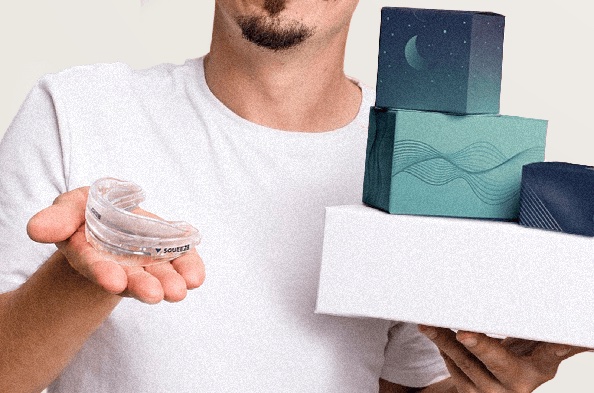
If you’re searching for the best products to stop snoring, someone has probably asked you to. Usually it’s a partner who’s tired of sleeping on the couch, or a snorer who’s tired of being nudged awake at 2 a.m.
You’re far from the only couple dealing with it. Nearly 70% of Americans who share a bed say their partner snores, according to the American Academy of Sleep Medicine’s 2021 findings.
Most people in that spot want something they can try at home that will actually work, and every option on the shelf promises quiet nights. Strips, sprays, pillows and mouthguards rarely say which kind of snoring they’re built for, though, which makes picking one feel like a guess.
That guess gets much easier once you know where your snoring starts, because each product works on a different part of the airway. A mouthpiece can’t clear a blocked nose any more than a nasal strip can move a jaw.
So we’ve ranked eight of the best anti-snoring products by the part of the airway each one affects, to help you figure out how to stop snoring in your case. Our own SnoreRx is on the list, and because we make it, we’ve been as upfront about where it falls short as we are about the other seven.
Key Takeaways
Match the product to the way you snore. A few nights of phone recordings can show whether your snoring follows a stuffy nose, your sleeping position or neither, and that tells you which type of product to try first.
Jaw-advancing mouthpieces have the strongest medical backing for everyday snoring. Sleep medicine guidelines favor them over doing nothing for adults whose snoring isn’t caused by sleep apnea, once a doctor has ruled that out.
A nightly product adds up over a year. A nasal strip at about 39 cents a night adds up to roughly $141 over twelve months, so compare first-year costs with replacements included before you compare price tags.
Some snoring is a reason to see a doctor. Snoring with breathing pauses or constant daytime tiredness can point to sleep apnea, which only a proper diagnosis can confirm.
Find your quiet setting with SnoreRx Plus. You mold it to your own teeth at home and fine-tune it one millimeter at a time, and first-time buyers on snorerx.com get 30 nights to try it, so shop SnoreRx Plus and start on the 1 mm setting.
Best Products to Stop Snoring at a Glance
Prices come from each maker’s own store or major US retailers, and they move with sales.
| Product | Best for | How it works | Price |
|---|---|---|---|
| SnoreRx Plus | Snoring from the jaw and tongue | Sets the lower jaw a little forward, adjustable a millimeter at a time | $99.99 |
| Breathe Right Extra Strength | Snoring that’s worse with a stuffy nose | An adhesive strip lifts the sides of the nose open | About $17 for 44 strips |
| Rhinomed Mute | Nasal snorers who’d rather skip adhesive | A soft insert sits just inside the nostrils and holds them open | $17.99 for a three-size starter pack |
| Good Morning Snore Solution | Tongue snoring, including denture wearers | Gentle suction holds the tip of the tongue forward | $79.94 |
| Somnofit-S | Jaw snorers who want a longer trial window | Moves the jaw forward with numbered straps you swap | $149.99 |
| Rematee Bumper Belt | Snoring that only happens on your back | Inflatable bumpers that make lying on your back uncomfortable | About $109 |
| MedCline Reflux Relief System | Back snorers who prefer no belt | A wedge and body pillow keep you raised and on your side | $249.99 |
| Smart Nora Gen 2 | Snorers who won’t wear anything at all | Inflates an insert under your pillow to move your head when it hears snoring | $439 to $499 |
How We Chose These Anti-Snoring Products
To find the best products to stop snoring in 2026, we only looked at products that physically change something while you sleep, like moving your jaw forward or keeping you off your back. Where several products work the same way, we kept the strongest one or two.
Each pick was judged on the same five points.
How it works. Which part of the airway the product acts on, and whether that matches a common reason people snore.
Evidence. What research says about the product type, kept apart from brand claims and customer reviews.
Clearance and safety. Whether mouth devices carry an FDA clearance, and who the maker says should avoid them.
First-year cost. The upfront price plus refills or replacements over twelve months.
Return terms. Whether you can send the product back when it isn’t working for you.
SnoreRx Plus sits at No. 1, and you don’t have to take our word for it. Forbes Vetted named it the best anti-snore device overall in February 2026, and the Sleep Foundation made it the top mouthpiece pick in its May 2026 guide.
NBC Select chose the original SnoreRx as its best snoring mouthguard in September 2026, citing a Northwestern sleep physician who says some of his patients have success with it.
Which Kind of Anti-Snoring Product Fits Your Snoring?
Your symptoms, sleep position and nasal breathing can offer clues about which anti-snoring products may be worth considering. Snoring often has more than one contributing factor, though, and home recordings can’t show exactly where your airway narrows or tell you whether you have sleep apnea.
| What you notice | Possible explanation | Products worth considering |
|---|---|---|
| Your nose feels blocked at night, or the snoring sounds soft and whistling | Nasal congestion may be playing a part | Nasal strips or a nasal dilator, alongside treating allergies or a cold |
| You snore mainly on your back and go quiet on your side | Sleep position may be a factor | A belt that keeps you off your back, or a wedge and body pillow |
| You snore on your side as well as your back, often with your mouth open | The jaw and tongue may be relaxing backward, though a blocked nose can also lead to mouth breathing | An adjustable jaw-advancing mouthpiece such as SnoreRx Plus |
| You won’t sleep with anything in your mouth or nose | A comfort preference | A wedge, a body pillow or another product that changes how you lie |
| Dentures, braces or loose teeth are part of the picture | A dental restriction on mouthpieces | A nasal product or one that changes how you lie, and a word with your dentist before anything goes in your mouth |
| You gasp, choke or stop breathing, or feel sleepy all day | Possibly sleep apnea | A doctor and a sleep test |
Two quick checks at home can add more clues. Close one nostril, keep your mouth shut and breathe in through the other side. If that nostril caves in, your nose is likely part of the noise. Then record a few nights on your phone, some on your back and some on your side, to hear whether rolling over quiets things.
The 8 Best Products to Stop Snoring, Reviewed
Three of the picks go in your mouth and two work on your nose, while the other three change the way you lie in bed.
1. SnoreRx Plus, Best Overall Pick
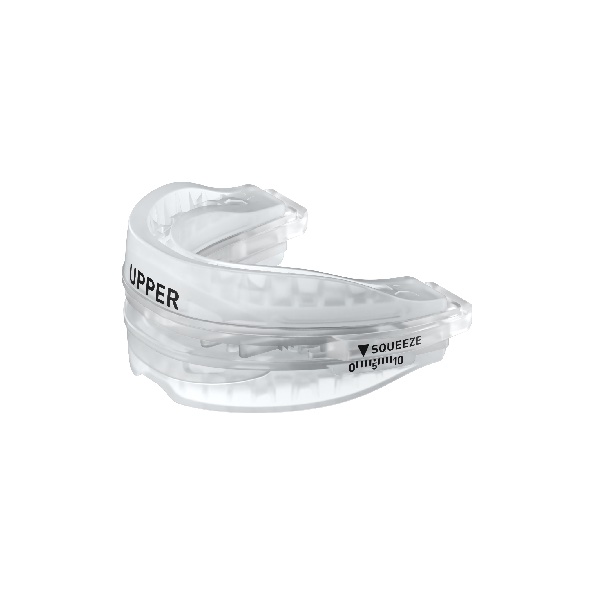
SnoreRx Plus is what sleep specialists call a mandibular advancement device, a mouthpiece that holds your lower jaw a little further forward than usual to give your airway extra room. It’s built for the snoring that happens when your jaw and tongue relax backward and narrow the space behind them.
You do the fit at home, starting with a 60-second soak in hot water to soften the material. You then bite down hard for half a minute, and five minutes in cool water lets the impression harden.
Those timings make the fit sound fiddlier than it is, and it’s much easier to follow once you’ve watched it done. Here’s a video on how to do it:
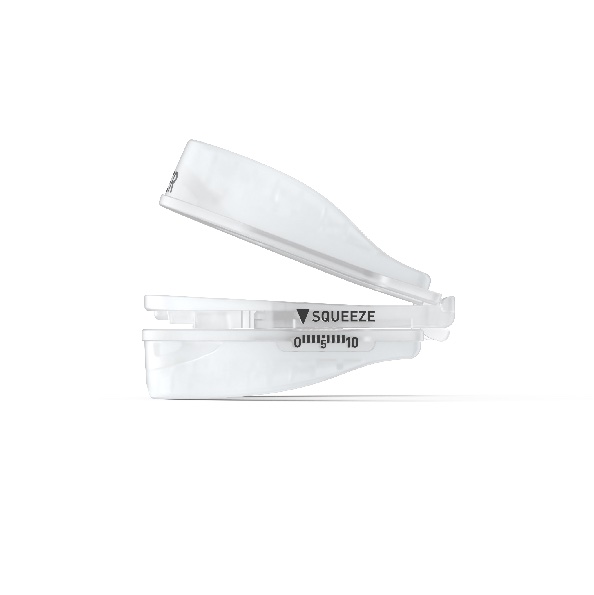
From there, you can edge it forward in single-millimeter steps, up to 6 mm, by squeezing both sides and moving it.
Compared with the original, the Plus has a hinged joint that lets your jaw open and close a little overnight, and its trays separate for cleaning.
The FDA has cleared SnoreRx for snoring reduction, and both models are made in the USA. Across the two models, the 2,300-plus verified buyers who left reviews rate it 4.9 out of 5 on average.
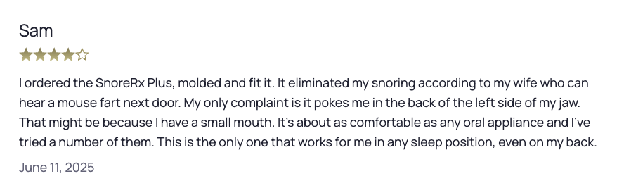
One user, Sam, gave SnoreRx Plus four stars after trying several other appliances, writing that “This is the only one that works for me in any sleep position, even on my back.” His one complaint was a spot that pokes the back of his jaw, which he puts down to having a small mouth.
Best suited to: Adults 18 and over with healthy natural teeth whose snoring comes from the jaw and tongue.
What it costs: $99.99. First-time buyers on snorerx.com get 30 nights to test it under our money-back guarantee; send it back within that window for a refund of the product price, minus shipping and handling.
When it may not help: It can feel bulky at first, and jaw or tooth soreness, extra saliva or a dry mouth can happen in the early nights. Skip it if you’re under 18, if you’ve ever had TMD, a disorder of the jaw joint, or if you live with a respiratory disorder, central sleep apnea, severe gum disease, advanced periodontal disease, loose teeth or abscesses.
Anyone with braces, dentures or another appliance in their mouth should pass on it too, and crowns, caps or implants need your dentist’s go-ahead first.
The original SnoreRx costs $59.99 and has no hinge, so your jaw stays in a single position all night and the device is cleaned in one piece. It fits and adjusts like the Plus, and both models are FDA-cleared to reduce snoring.
Teeth grinding or clenching at night is worth raising with your dentist before you try either model. SnoreRx is designed to reduce snoring and isn’t meant to treat grinding itself, and grinding may shorten the device’s lifespan.
If the lower price matters most and you don’t need the hinge, get the original. If you’d like a little room to open your mouth at night and a device you can take apart to clean, the Plus is the one to get.
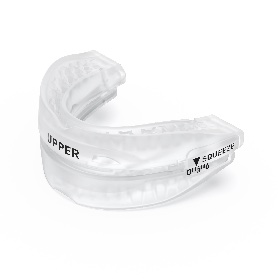
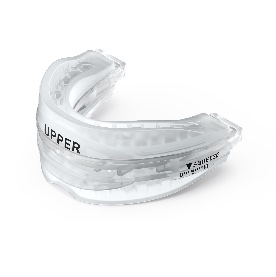
Being the snorer comes with its own guilt, from the nudges in the night to the tired face across the breakfast table the next morning. SnoreRx gives you both something to adjust together, a millimeter at a time, until your snoring eases.
Shop SnoreRx and choose between the hinged Plus and the $59.99 original.
2. Breathe Right Extra Strength, Best Nasal Strips
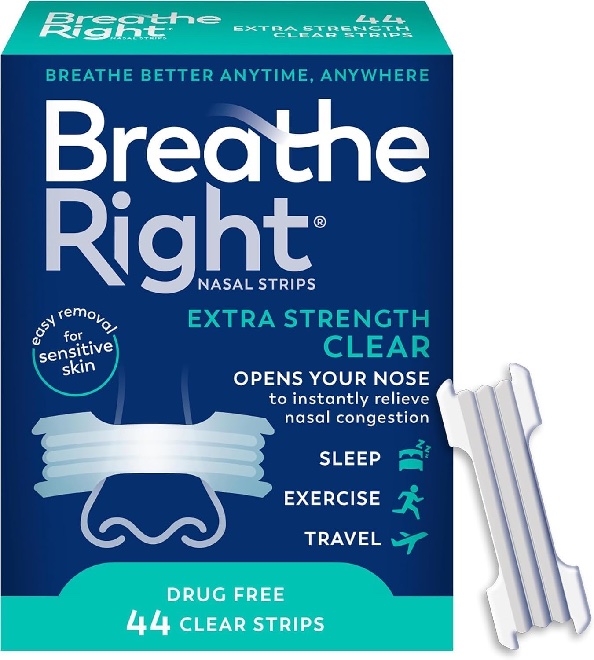
Breathe Right Extra Strength is a drug-free strip with spring-like bands that sit over the sides of your nose and lift them open from the outside. Its maker rates it 50% stronger than the original strip and sells it for snoring caused by nasal congestion.
Best suited to: Snoring that gets worse with a cold, allergies or a nose that often feels blocked.
What it costs: About $17 for a 44-count box at Walmart, which works out to roughly 39 cents a night.
When it may not help: If your nose already breathes freely, a strip has nothing to open, and it can’t stop a jaw or tongue from falling back. The cost also repeats every single night.
3. Rhinomed Mute, Best Reusable Nasal Dilator
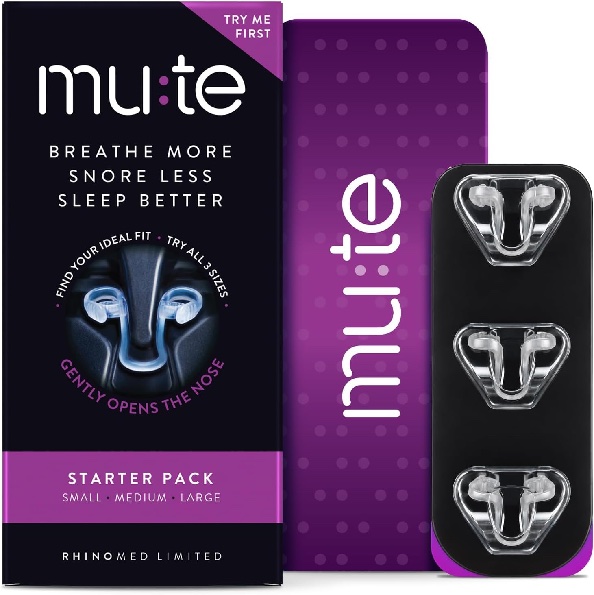
Rhinomed Mute works on the nose from the inside. A soft, adjustable insert made from medical-grade material sits just inside the nostrils and holds them open, with no adhesive touching your skin.
It comes in small, medium and large, and the starter pack includes one of each so you can find your fit. Rhinomed recommends each dilator for up to 10 nights with a daily rinse in warm, soapy water, and Forbes Vetted named it the best anti-snore nasal dilator in February 2026.
Best suited to: Nasal snorers who don’t like adhesive on their skin, or who want something reusable for more than one night.
What it costs: $17.99 at Walmart for the three-size starter pack, which covers about 30 nights.
When it may not help: Like a strip, it does nothing for a jaw or tongue that falls back. Rhinomed’s money-back guarantee covers only a starter pack bought directly from the brand, and you can’t return used dilators for a change of mind.
4. Good Morning Snore Solution, Best for Tongue Snoring
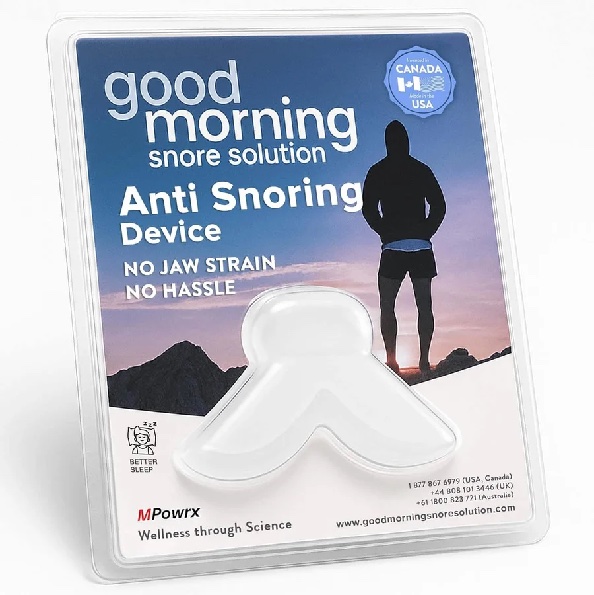
Good Morning Snore Solution leaves your jaw alone and works on the tongue instead. You squeeze a soft bulb, rest its outer rim between your lips and teeth, and gentle suction holds the tip of your tongue forward so it can’t fall back while you sleep.
It’s FDA-cleared as an aid for reducing snoring in adults, needs no molding and comes in regular and small sizes. Its maker says it works with dentures because it doesn’t grip the teeth, and dentures rule out SnoreRx.
Best suited to: Tongue snorers and denture wearers whose nose stays clear at night.
What it costs: $79.94, returnable within 30 days of delivery, minus shipping.
When it may not help: You have to breathe through your nose while wearing it, so a blocked nose makes it hard to use. Drooling and a sore tongue are possible early on, and the suction can feel strange at first.
5. Somnofit-S, Best Strap-Adjusted Mouthguard
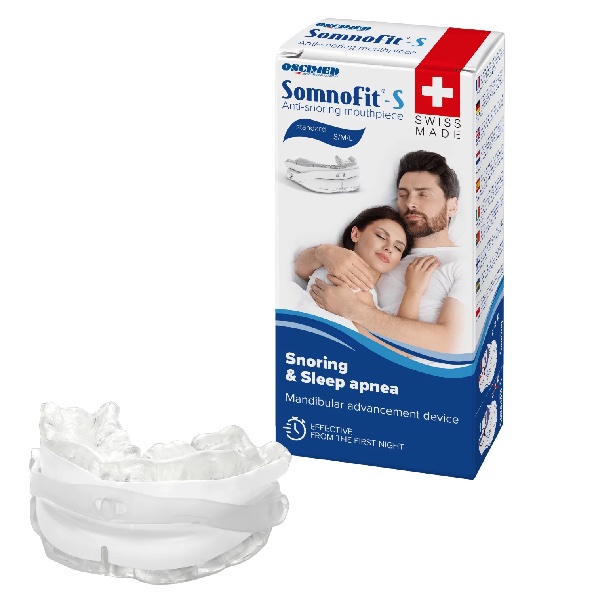
Somnofit-S is another jaw-advancing mouthpiece, made by the Swiss company Oscimed and sold in the US by SnoreLessNow. It’s molded at home in hot water like SnoreRx, but you set how far it moves your jaw by swapping numbered straps across your front teeth and wearing each one for three to five nights.
In the Sleep Foundation’s guide it earned the most comfortable label, and its 120-night money-back guarantee gives you four times as long to decide as our 30 nights. It’s FDA-cleared for snoring and can be remolded up to three times if the first fit goes wrong.
Best suited to: Jaw snorers who want a long trial and don’t mind changing straps to adjust.
What it costs: $149.99, which runs $50 higher than SnoreRx Plus, with replacement straps at $11.99.
When it may not help: Changing the setting means swapping a strap instead of squeezing the sides. Returns aren’t accepted before night 14, and the original shipping isn’t refunded.
6. Rematee Bumper Belt, Best for Back-Only Snoring
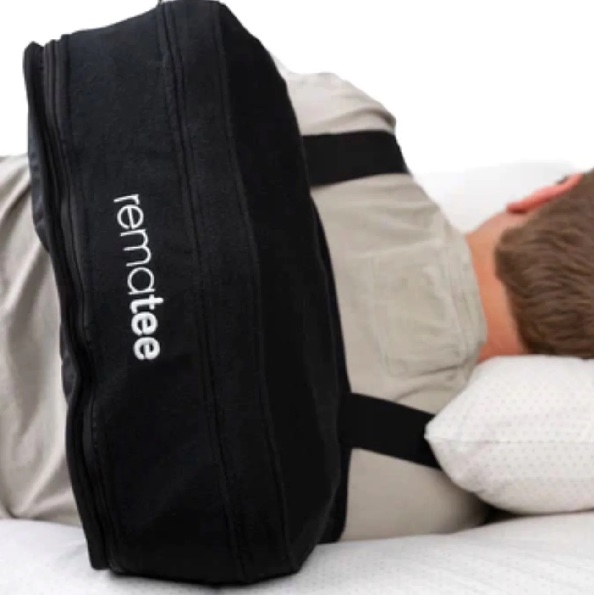
If you only snore on your back, staying off it may be all you need. The Rematee Bumper Belt straps around your torso with inflatable bumpers sitting behind you, so rolling onto your back becomes uncomfortable enough that you settle on your side.
Rematee sells the belt in medium, large and XL and advertises a 30-night trial. Nothing goes in your mouth or on your face, so there’s no fitting to do and nothing to clean.
Best suited to: Snorers who go quiet as soon as they roll onto their side.
What it costs: About $109.
When it may not help: Staying on your side won’t change snoring that happens in every position, and sleeping in a belt takes a few nights to get used to.
7. MedCline Reflux Relief System, Best Positional Pillow System

MedCline designed its Reflux Relief System primarily for nighttime acid reflux, not snoring. Its wedge elevates the upper body at 15 to 20 degrees, while the body pillow encourages side sleeping.
Changing how you lie may reduce snoring in some people, although evidence for this specific MedCline system as an anti-snoring treatment is limited. It comes in small, medium and large, with the wedge rising 6 to 8 inches depending on size.
Best suited to: Back snorers who’d rather sleep propped up than wear anything.
What it costs: $249.99 for the standard system. You have to keep it for 30 days before returning it within 60 days of delivery, a $25 fee comes off the refund and the original shipping isn’t refunded.
When it may not help: Some people find a raised, side-only position hard to keep up night after night, and snoring that continues on your side won’t change.
8. Smart Nora Gen 2, Best Hands-Off Option
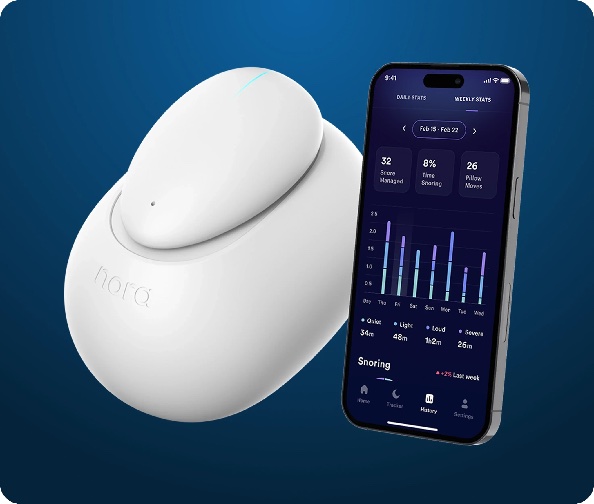
Smart Nora is built for people who refuse to wear or attach anything. A small pebble on your nightstand listens for snoring, then signals a pump that gently inflates an insert under your own pillow and nudges your head into a new position.
You get a 30-night money-back trial and free return shipping, and a one-year warranty covers it afterward. Nothing touches your face while you sleep.
Best suited to: Snorers who won’t wear anything and whose snoring changes when their head moves.
What it costs: Usually $439 to $499, depending on sales.
When it may not help: It’s the most expensive of the eight by a wide margin, and moving your head does nothing for snoring that continues in every position.
Which Anti-Snoring Products Have Research Behind Them?
Most kinds of anti-snoring products rest on small or mixed studies, and jaw-advancing mouthpieces are the exception for everyday snoring.
| Product type | What the research supports | What’s still uncertain |
|---|---|---|
| Mouthpieces that move the jaw forward | The American Academy of Sleep Medicine and the American Academy of Dental Sleep Medicine recommend them over no treatment for adults whose snoring isn’t caused by sleep apnea, in a joint 2015 guideline. | The guideline assumes a doctor has ruled out sleep apnea and prescribed the device. Its preference for custom-made, adjustable devices applies to sleep apnea treatment, and it says nothing specific about over-the-counter mouthpieces. |
| Mouthpieces that hold the tongue forward | Research on these devices for snoring alone is limited, and the FDA has cleared at least one as an aid for reducing snoring in adults. | One head-to-head trial in people with sleep apnea found they used a tongue device less consistently than a jaw device, and most preferred the jaw device. |
| Nasal strips and dilators | A 2016 review pooling 14 studies found that nasal dilators improve nasal breathing, and some studies reported less frequent snoring. | Snoring results were small and inconsistent, and the review found no clear change among people with sleep apnea. That still leaves room for a benefit when snoring is tied to a congested nose. |
| Side-sleeping belts and raised sleeping | A 2024 review of the published studies found that sleeping on your side and raising the head of the bed reduce snoring by widening the airway. | The authors found only a few short-term studies, and some people can’t tolerate a steep incline or a forced position for long. |
When a product’s marketing leans on testimonials and says little about how it works, treat the claim as unproven. Buy it somewhere with a return window, so a trial that doesn’t work costs you little more than the shipping.
Anti-Snoring Products That May Not Be Worth Your Money
Some of the most heavily advertised fixes have the thinnest evidence, and a couple of them carry real risks.
Mouth tape. It’s popular on social media, but a 2025 review of the research on mouth taping warned of a potentially serious risk of harm, including suffocation when the nose is blocked.
Throat and nasal sprays. Sprays that coat the back of the mouth are likely to wear off during the night. And specialists warn against decongestant sprays for snoring because long-term use can cause dependence.
Mouthpieces with big claims and little detail. Be wary of any mouthpiece that promises results without explaining how to fit it, who shouldn’t use it or what evidence backs it, because you can’t judge whether it’s safe for your teeth or likely to help.
Trackers and snore apps on their own. A smart ring or recording app measures the problem without changing it, so it works best to see whether another product is helping.
Earplugs and white noise as the only fix. They protect your partner’s sleep while you work out the cause, and your snoring carries on underneath them.
Which Anti-Snoring Product Costs the Least Over a Year?
Over a year, replacements matter more than the sticker price. Each estimate uses the maker’s own price and lifespan guidance and assumes nightly use, with a range wherever a product may need replacing within the year.
| Product | Upfront price | Maker’s lifespan guidance | Estimated first-year cost |
|---|---|---|---|
| SnoreRx | $59.99 | Between 1 and 1.5 years, less if you grind | $59.99, or $99.99 as a two-pack if grinding shortens its life |
| SnoreRx Plus | $99.99 | Between 1 and 1.5 years, less if you grind | $99.99, or $154.98 as a two-pack if grinding shortens its life |
| Breathe Right Extra Strength | About $17 for 44 strips | One strip per night | About $141 |
| Rhinomed Mute | $17.99 for 3 dilators | Up to 10 nights per dilator | About $219 |
| Good Morning Snore Solution | $79.94 | About one year on average | $79.94 to $159.88 |
| Somnofit-S | $149.99 | 6 to 12 months, 3 to 6 with grinding | $149.99 to $224.98 with its two-device discount |
| Rematee Bumper Belt | About $109 | Reusable, no refills | About $109 |
| MedCline Reflux Relief System | $249.99 | Reusable, no refills | $249.99 |
| Smart Nora Gen 2 | $439 to $499 | Reusable, one-year warranty | $439 to $499 |
Nasal strips and dilators look cheapest at checkout, yet twelve months of nightly use costs more than SnoreRx Plus. If you grind your teeth, plan on replacing any mouthpiece sooner than the makers’ standard lifespans suggest.
Return terms affect the real cost too. A product you can’t send back costs its full price when it doesn’t work for you, while one with a trial window costs you a few weeks and the shipping.
How to Tell Whether Your Anti-Snoring Product Is Working
Give any product a fair trial with a before-and-after, because one quiet night proves very little. Alcohol before bed and sleeping on your back both make snoring more likely, according to the American Academy of Sleep Medicine’s snoring advice, so a single good night can be luck.
Record three ordinary nights first. Use a snore-recording app on your phone, or ask your partner to note how loud it gets and how often it wakes them.
Keep your evenings steady. Similar bedtimes and no alcohol close to bed make the before-and-after comparable.
Log comfort next to the noise. Jot down morning jaw or tooth soreness, dry mouth and how often you woke, so you can tell a setting that’s too far forward from one that isn’t far enough.
With SnoreRx, the 30-night clock starts on delivery day, so record your normal nights while you wait for the parcel. Comfort and the instructions decide when you move forward, so treat the night numbers as a rough guide.
| Stage | What to do | What to log |
|---|---|---|
| Before night 1 | Record three ordinary nights before your SnoreRx arrives, then get used to it with one to three hours of daytime wear on each of the first two or three days | Snoring on the recording, partner notes, alcohol and congestion |
| Nights 1 to 5 | Sleep on the 1 mm starting position, giving it no fewer than three to five nights | Snoring compared with your normal nights, plus jaw and tooth comfort each morning |
| Nights 6 to 10 | Move to 2 mm if you’re still snoring and the first setting felt comfortable | The same notes, and whether you woke more or less often |
| Nights 11 to 25 | Advance a millimeter per step, allowing no fewer than three to five nights per position, and stay put once your snoring is reduced | Which setting gave the quietest recordings without soreness |
| Nights 26 to 30 | Compare your best nights with your normal ones and decide before 30 days have passed since delivery | Your partner’s verdict next to the recordings |
Pain that lingers, teeth that shift or a bite that feels off all mean it’s time to pause and get your dentist’s opinion.
The right setting usually lands between 3 and 5 mm. Getting from the 1 mm starting point to 4 mm takes three adjustments and at least 9 to 15 nights, which still leaves time inside the 30-night window to judge the result.
A phone recording can help you spot trends, but it can’t tell you whether you have sleep apnea. If the recordings pick up choking sounds or long silences between breaths, see a doctor.
When Snoring Needs a Doctor
Loud snoring with gasping or pauses in breathing, or heavy sleepiness during the day, can point to obstructive sleep apnea. The National Heart, Lung, and Blood Institute lists these as common warning signs, and they call for a diagnosis no product can provide.
SnoreRx is FDA-cleared for the reduction of snoring. It is not FDA-cleared for diagnosing or treating obstructive sleep apnea. If you think you may have sleep apnea, speak with a healthcare professional.
Our guide to seeking snoring treatment covers what to expect from that first appointment and the questions worth bringing with you.
Start Your 30 Nights at 1 mm
If your partner starts the night next to you and ends it on the couch, the next thing you try should be something you can adjust to your own jaw. SnoreRx Plus is shaped around your bite and moves in small steps, so you can home in on the position that reduces your snoring without guessing.
New customers who buy at snorerx.com have 30 nights to decide whether to keep it. Shop SnoreRx Plus and let the first setting run for its full three to five nights, then decide.
FAQs About Anti-Snoring Products
What is the most effective product to stop snoring?
The answer changes with the source of your snoring. For snoring that seems to come from the jaw and tongue, a mouthpiece that moves the lower jaw forward is the closest match and has the most clinical research behind it. If your nose or sleeping position is the cause, a nasal strip or a sleep-position product is the closer match for where the noise starts.
Will a jaw-advancing mouthpiece reduce my snoring?
Yes, for many people whose snoring comes from the jaw and tongue. By sitting the lower jaw a few millimeters forward, a jaw-advancing mouthpiece adds space to your airway, and adjustable models let you creep forward in small steps until you find your setting. Results vary from person to person, so a few nights at each setting tell you far more than the first night does.
Are nasal strips better than a mouthguard for snoring?
Only when your nose is the bottleneck. Strips widen the nostrils from the outside, which can help when congestion is behind the snoring, but they can’t stop the jaw and tongue from relaxing backward. If you snore just as loudly with a clear nose, a mouthguard is the better match.
Is the hinge on SnoreRx Plus worth paying for?
For $40 more, you get a hinge for some up-and-down jaw movement and trays that pull apart for brushing, so it’s worth it if either matters to you. Fitting and the 1 mm steps don’t change between models, which leaves the $59.99 original as the better value when neither extra appeals.
Is a dentist-made oral appliance better than an over-the-counter mouthpiece?
A dentist-made appliance is fitted by a professional, who also adjusts it and checks on you over time. The two sleep medicine academies recommend jaw-advancing appliances for adults whose snoring isn’t caused by sleep apnea, after a medical evaluation. If the diagnosis is obstructive sleep apnea, the academies favor a custom-made, adjustable appliance that a dentist fits and manages over anything off the shelf.
An adjustable mouthpiece you buy over the counter, such as SnoreRx, may be a more affordable option for eligible adults who want to reduce snoring that isn’t caused by sleep apnea, but it isn’t the same as sleep apnea treatment managed by a professional. Our comparison of custom oral appliances goes through the trade-offs.
What’s the best way to keep a snoring mouthpiece clean?
Each morning, once it’s out, scrub it with a toothbrush and a little toothpaste before leaving it to air dry and storing it in its case. Harsh cleaners such as bleach, ammonia or alcohol-based rinses can damage it, and our cleaning routine guide covers the rest.